Full Moon Elixirs
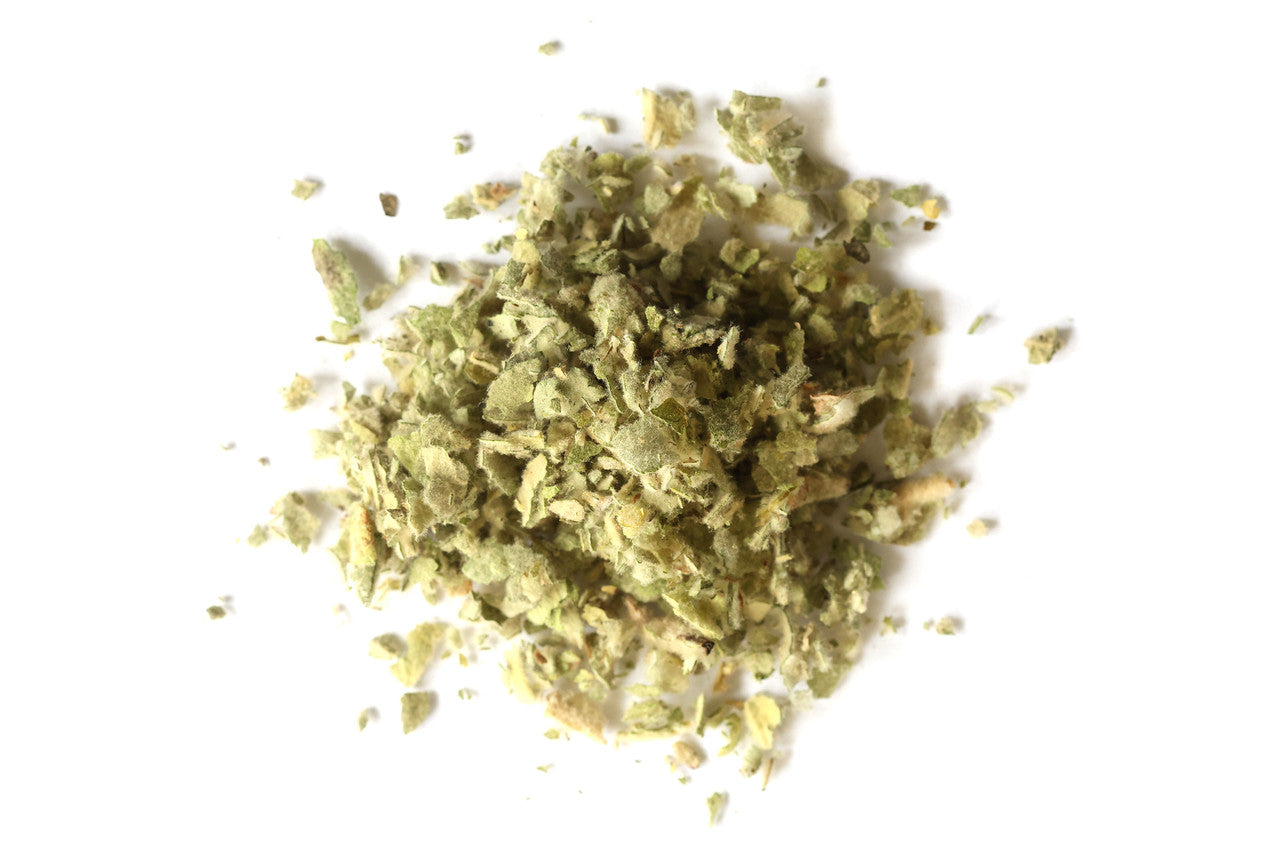
Mullein Leaf Organic
Mullein Leaf Organic
Couldn't load pickup availability
Mullein Leaf (Verbascum thapsus)
Mullein is a plant of contradictions. It is technically a weed — thriving in compacted, depleted soils where little else will grow, breaking up the earth with its deep roots, enriching it with its spent foliage, and then quietly moving on once it has done its work, leaving the ground improved for whatever comes next. And yet this humble roadside plant carries one of the richest folk histories in the entire herbal world, a legacy so extensive that herbalist Maida Silverman once wrote that "the great respect and love formerly accorded to mullein can be inferred from the number and variety of the folk names for it."
A biennial member of the Scrophulariaceae family, mullein spends its first year as a low, spreading rosette of extraordinarily soft, silvery-green leaves — so densely fuzzy they have been called nature's toilet paper, and were once dried and used as candle wicks. In its second year it sends up a dramatic flowering spike that can reach eight feet tall, crowded with bright yellow blossoms that open one at a time, each lasting only a single day. The genus name Verbascum is thought to derive from the Latin barbascum — barba meaning beard — a nod to those famously woolly leaves. In ancient Rome, the dried flowering stalks were dipped in tallow and carried as torches, earning mullein the evocative folk names "candlewick plant" and "torches."
Its herbal history is just as luminous. Dioscorides, the Greek physician and botanist whose De Materia Medica shaped herbal medicine for over a millennium, was among the first to document mullein's use for lung conditions nearly 2,000 years ago. In ancient Rome the leaf ash was used to darken hair and the yellow flowers to lighten it. The Eclectic Physicians of 19th century America — practitioners who built their medical system around botanical remedies — considered mullein a reliable demulcent, diuretic, and mild nervine that favored sleep, and King's American Dispensatory noted its pronounced influence upon the upper respiratory tract.
Mullein's magical folklore is equally rich. It was believed to instill courage, provide protection, attract love, ensure fertility, and keep dangerous animals at bay on wilderness journeys. In the Ozark mountains, men reportedly pointed the plant's flowering stalk toward the home of their beloved to see if it would right itself again — a living love letter of sorts. Introduced to North America by European colonists, mullein was quickly woven into Native American healing traditions as well. The Abnaki shaped the root into necklaces for teething infants. The Cherokee applied the leaves as a poultice for cuts and swollen glands. Other tribes rubbed the leaves on the body during ritual sweat baths. The Navajo smoked it, calling it "big tobacco" — a practice the Amish were also known to share.
Today mullein remains a gentle and beloved staple of the herbal apothecary, most commonly prepared as a soothing leaf tea, a syrup, or a flower-infused ear oil. It can also be macerated into an extract or incorporated into herbal smoking blends in the traditional manner.
Precautions: The fine hairs on mullein leaf may cause mechanical irritation in the mouth and throat if not properly strained from infusions or extracts before consuming. As with all herbal products, we recommend consulting a qualified healthcare practitioner before use, particularly if you are pregnant, nursing, or taking any medications.
Share