Full Moon Elixirs
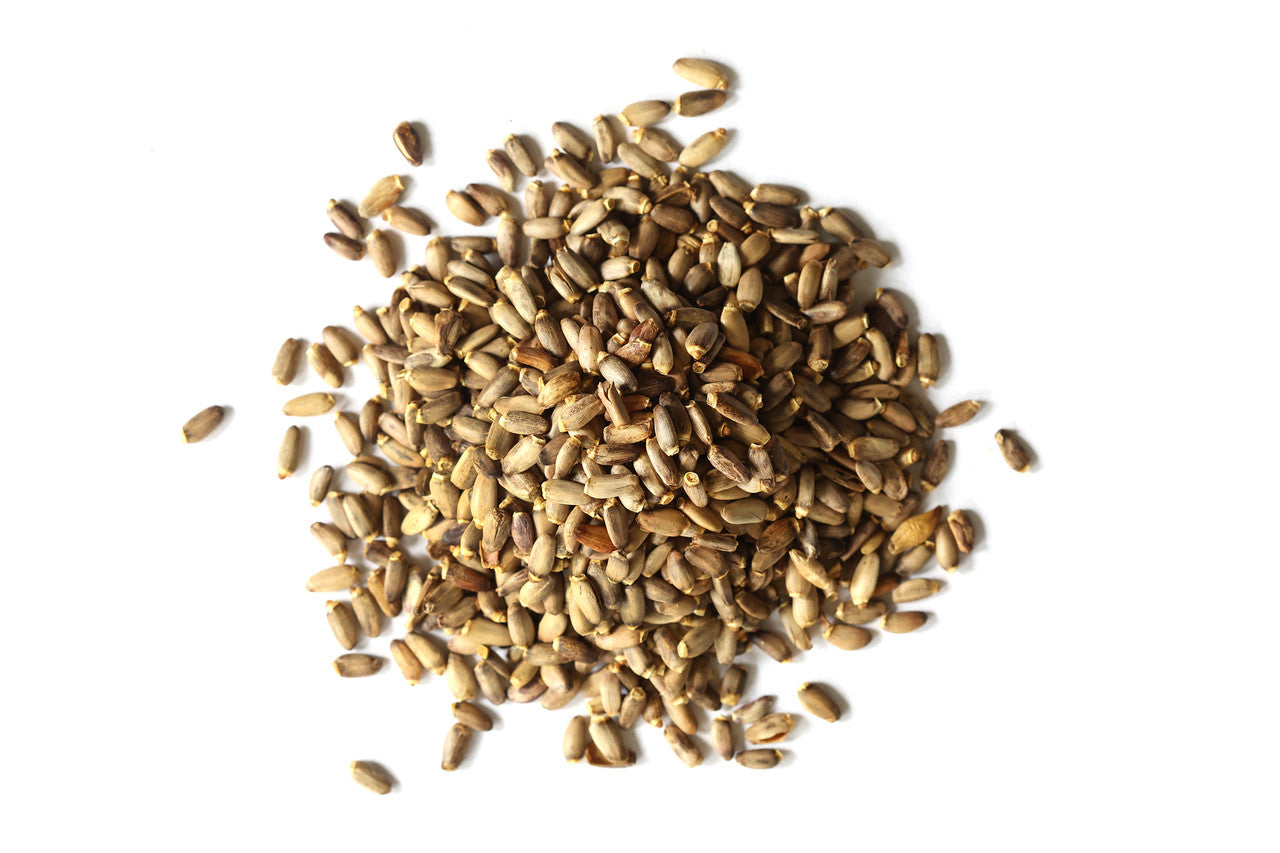
Milk Thistle Seed Organic
Milk Thistle Seed Organic
Couldn't load pickup availability
Milk Thistle Seed (Silybum marianum)
Milk thistle is a plant that announces itself. Growing three to seven feet tall with glossy, deeply veined leaves edged in sharp spines and crowned with solitary purple flowers up to two and a half inches across, it is not a plant that blends quietly into the landscape. In the United States it is classified as a noxious weed in several states — particularly in the Pacific Northwest — which says less about the plant's character than about its extraordinary vitality. Each flower can produce up to 190 seeds, and each plant up to 6,350 over its lifetime. Milk thistle, once established, intends to stay.
The distinctive white marbling that traces the veins of its leaves has inspired one of the plant's most enduring stories. Ancient tradition holds that the milky markings were left by drops of the Virgin Mary's milk falling upon the plant as she nursed the infant Jesus — a legend so widely believed that it gave rise to both the common name and the Latin species name marianum. It is the kind of story that a plant this striking seems to invite.
Native to the Mediterranean and southwestern Europe, milk thistle has been known and used since antiquity. In ancient Greece and Rome it was primarily the leaves that were valued, eaten as a vegetable and used for their beneficial properties. Dioscorides noted the usefulness of the seeds for venomous stings and snake bites — and in one of herbal history's more puzzling folk recommendations, an old wives' tale apparently suggested that a man wear milk thistle around his neck to inspire aggression in snakes. The reasoning behind this remains, as one old herbal diplomatically noted, rather curious.
Nicholas Culpepper, the indefatigable 17th century herbalist, astrologer, and author of the Complete Herbal, recognized milk thistle's kinship with blessed thistle and recommended the young spring plant boiled as a tonic alterative — eaten much like cabbage after the careful removal of its spines. The flowerheads, closely related to the artichoke, were eaten as well, and the root was used in addition to the leaves, seeds, and flowers. By the 1800s the Eclectic Physicians of America had incorporated milk thistle seeds into their practice as a remedy specifically for congestion of the liver, spleen, and kidneys — an application that modern research has since examined with great interest.
Today it is the seed that holds center stage in the herbal apothecary, long revered in Western herbalism for its support of the liver's natural processes. Milk thistle seed is most commonly prepared as a decoction, and can also be powdered for tincturing or encapsulated for convenient daily use.
Please note: We are unable to ship this product to Washington State.
Precautions: Milk thistle may cause allergic reactions in those sensitive to plants in the Asteraceae family. As with all herbal products, we recommend consulting a qualified healthcare practitioner before use, particularly if you are pregnant, nursing, or taking any medications.
Share