Full Moon Elixirs
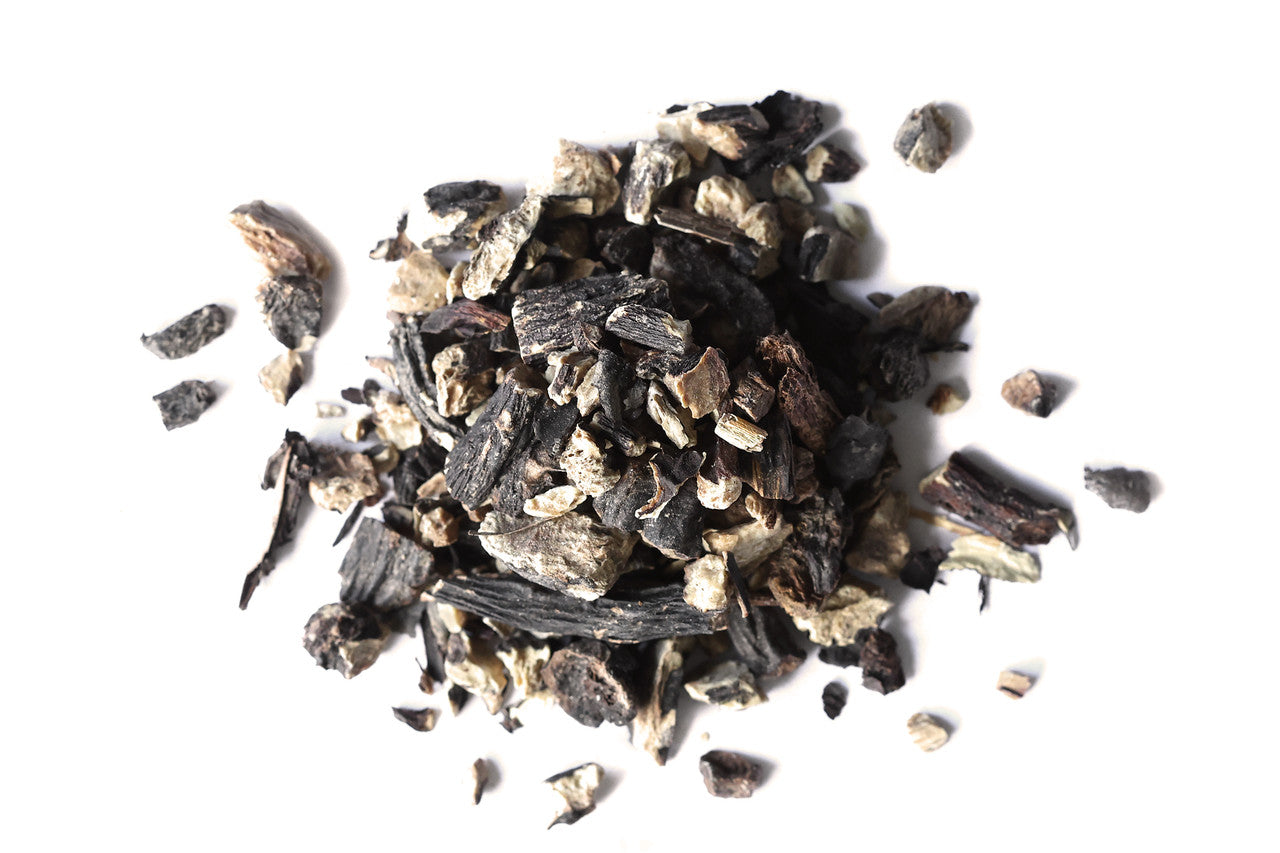
Comfrey Root Organic
Comfrey Root Organic
Couldn't load pickup availability
Comfrey Root (Symphytum officinale)
Comfrey is a plant with deep roots — literally and figuratively. Its black taproot plunges far into the earth, drawing up minerals from below the reach of most other plants, and its history in European folk medicine runs just as deep. For thousands of years this robust, generous herb has been one of the most trusted botanicals in the Western herbal tradition, valued above all for its remarkable properties in topical preparations.
A member of the Boraginaceae family — alongside borage and heliotrope — comfrey is a striking plant in the garden and the wild alike. It grows large and hairy, with broad lance-shaped leaves rough to the touch and tall flower spikes that curl in the characteristic scorpioid fashion of its botanical family, producing bell-shaped blossoms in shades of white, pink, and purple. Native to much of Europe and across temperate Asia — from the Caucasus and Turkey through Kazakhstan and into Siberia — it has naturalized widely across the northern hemisphere and is commonly found growing as a vigorous weed in moist, temperate soils. Once established, comfrey is not easily discouraged.
The genus name Symphytum derives from the Greek symphyo — "to grow together" — a name that speaks directly to comfrey's most celebrated traditional attribute and the long history of its use in European folk practices for supporting the body's natural healing processes externally. Folk names across Europe reflect this reputation, and the plant has appeared in herbal texts and household remedy collections for centuries as a cornerstone of the topical apothecary.
The Symphytum genus contains around 35 species, several of which have been used interchangeably in traditional practice, though pyrrolizidine alkaloid content varies between them and is highest in Russian comfrey (S. x uplandicum) and prickly comfrey (S. asperum). Our comfrey root is Symphytum officinale, the species with the longest and most established history of traditional use.
Comfrey root is best suited for external preparations — infused oils, salves, poultices, and creams — where it has been a beloved and trusted ingredient for generations of herbalists and home apothecaries.
Precautions: For external use only — not for internal use. Do not apply to broken or abraded skin. Do not use while nursing. As with all herbal products, we recommend consulting a qualified healthcare practitioner before use, particularly if you are pregnant, nursing, or taking any medications.
Share