Full Moon Elixirs
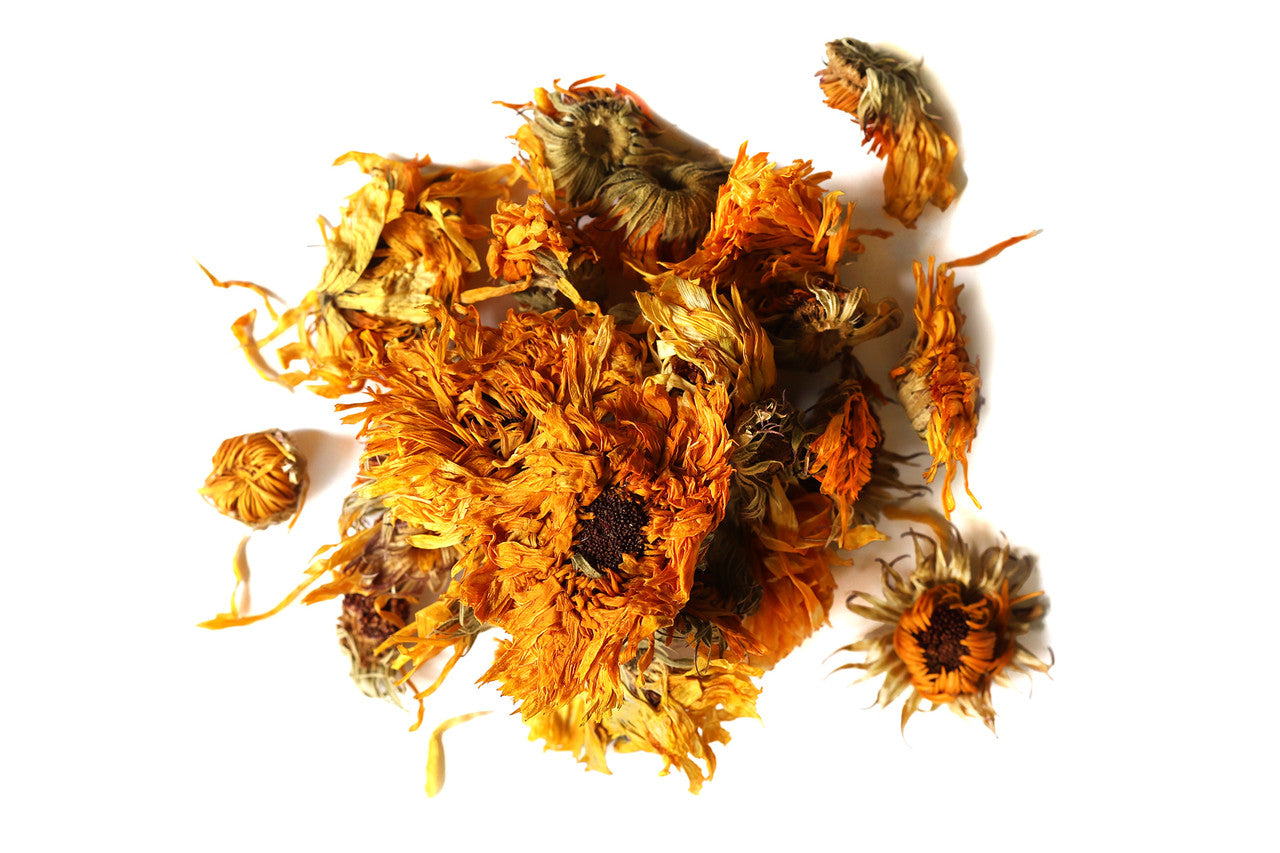
Calendula Flowers Organic
Calendula Flowers Organic
Couldn't load pickup availability
Calendula Flower (Calendula officinalis)
Calendula is a plant that orients itself toward the light — quite literally. As the 16th century English botanist Henry Lyte observed, its flowers close at sunset and open again each morning with the rising sun, a daily rhythm so reliable it once served as a kind of living clock. It is a fitting trait for an herb so long associated with warmth, brightness, and the life-giving energy of the sun itself.
Native to Southern Europe, Egypt, and the Mediterranean, this cheerful annual now grows in gardens across the world, recognized by its vivid orange and yellow daisy-like blooms and pale green leaves. Harvested in the heat of summer days when the resins are at their peak, the flowers are carefully dried at low temperatures to preserve their brilliant color — that same luminous golden hue that earned calendula the nickname "poor man's saffron" in medieval Europe, where it was used to color soups, spice foods, brighten butter, and dye hair long before saffron was widely available.
Its history is as rich as its color. Calendula is believed to have been first cultivated by St. Hildegard of Bingen, the remarkable 11th century herbalist and nun working in present-day Germany, and it has appeared as a mainstay in European herbal texts ever since. The 17th century botanist and astrologer Nicholas Culpepper recommended calendula juice mixed with vinegar as a rinse for skin and scalp, and wrote that a tea of the flowers "comforts the heart." Astrologically linked to the sun and the fire element, calendula was believed to carry protective and clarifying powers — flowers strung above doorposts were said to keep evil out, and placed beneath the bed, to guard one's sleep.
Beyond Europe, calendula has earned its place in healing traditions across the globe. In Ayurvedic practice it is considered energetically cooling with a bitter and pungent quality. In Traditional Chinese Medicine it is known as jin zhan ju — energetically neutral and drying — and valued for supporting healthy skin. In North American indigenous traditions it has been used to soothe the occasional upset stomach.
Today, calendula remains one of the most beloved and versatile botanicals in the herbal apothecary. Infuse the flowers in oil as the base for lotions, creams, and balms. Brew them as a golden, gently flavored tea. Add them to herbal blends for a bright pop of color and a touch of sunny warmth.
Precautions: Those with known allergies to plants in the Asteraceae family — including chamomile, feverfew, or echinacea — should use caution, as cross-reactivity within this plant family is common. As with all herbal products, we recommend consulting a qualified healthcare practitioner before use, particularly if you are pregnant, nursing, or taking any medications.
Share